On Page SEO Checklist for Beginners
Learn the essential on page SEO checklist to improve website rankings, optimize content, and attract more organic traffic.
Search engines analyze hundreds of ranking signals to determine which pages should appear in search results. One of the most important factors is on page SEO.
On page SEO refers to the optimization techniques applied directly to your website pages. These improvements help search engines understand your content and make it easier for users to find valuable information.
If you are new to search engine optimization, following a structured checklist can significantly improve your chances of ranking on Google.
Before implementing these steps, you may want to explore useful platforms mentioned in our guide on Free SEO Tools for Website Growth.
What Is On Page SEO
On page SEO includes all the elements you can control on your website pages.
These elements include:
• page titles
• headings
• content structure
• internal linking
• images
• page speed
• mobile friendliness
Optimizing these factors improves both user experience and search engine visibility.
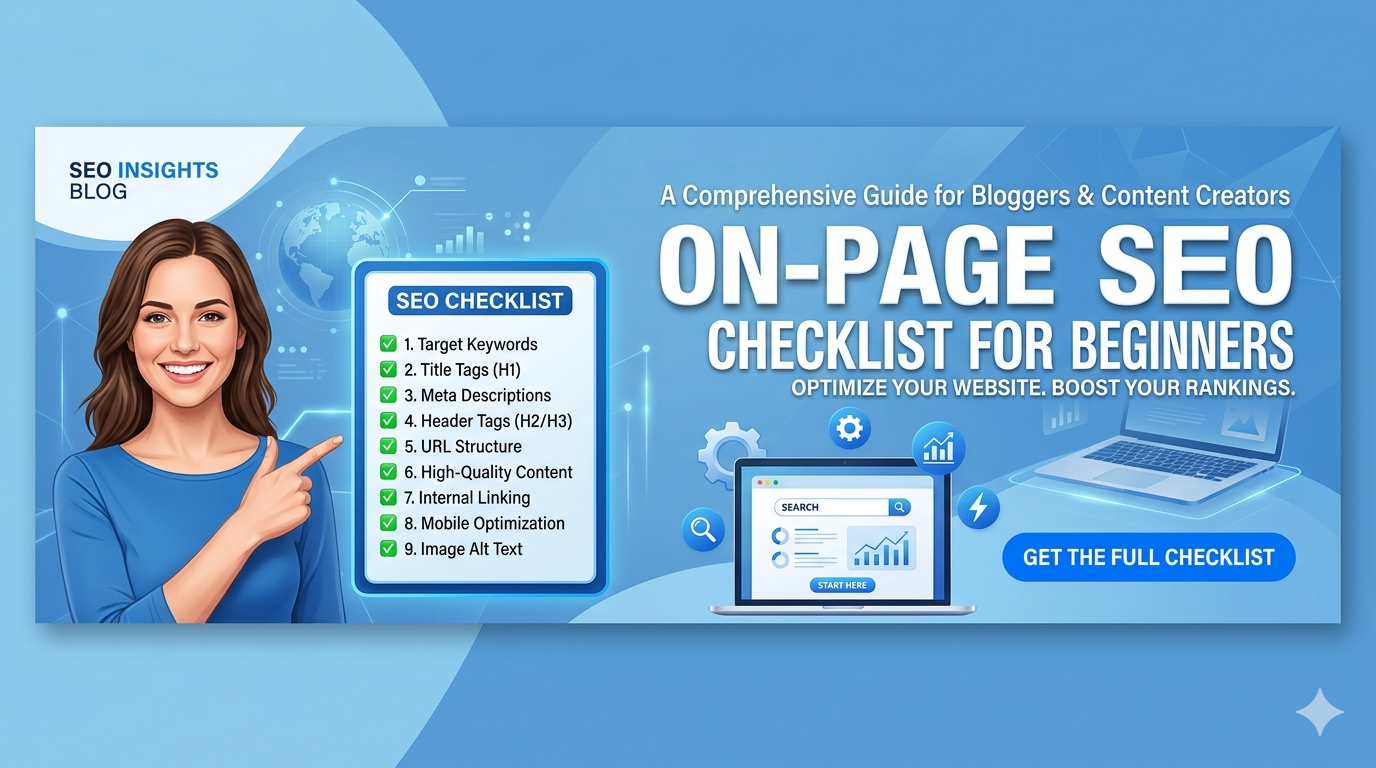
On Page SEO Checklist
Follow this checklist when publishing a new article or optimizing existing pages.
1. Use a Clear SEO Title
Your title tag is one of the most important ranking factors.
Best practices include:
• include the primary keyword
• keep titles under 60 characters
• write titles that attract clicks
Example title
Best Free SEO Tools for Bloggers
2. Write a Strong Meta Description
A meta description summarizes your page content.
Although it does not directly impact rankings, it improves click through rates.
Tips:
• keep it under 160 characters
• include your target keyword
• explain the value of the article
3. Use Proper Heading Structure
Headings help search engines understand the structure of your content.
Use the following hierarchy:
H1 for the main title
H2 for major sections
H3 for subsections
A well structured article improves readability and SEO.
4. Optimize URL Structure
SEO friendly URLs should be short and descriptive.
Example
yourwebsite.com/on-page-seo-checklist
Avoid long URLs with unnecessary numbers or symbols.
5. Add Internal Links
Internal links connect related pages on your website.
For example, you can link to your guide on Best Free Keyword Research Tools for SEO when discussing keyword research.
Benefits include:
• improved crawlability
• better site structure
• increased time on site
6. Use Keyword Naturally in Content
Place your main keyword in:
• title
• introduction
• headings
• conclusion
Avoid keyword stuffing. Write naturally for readers.
7. Optimize Images
Images improve user experience but must be optimized.
Use these best practices:
• compress images for faster loading
• add descriptive alt text
• use relevant file names
Example alt text
on page SEO checklist for website optimization
8. Improve Page Speed
Website speed affects both rankings and user experience.
Improve speed by:
• compressing images
• using a fast hosting provider
• enabling browser caching
9. Ensure Mobile Friendliness
Most internet users access websites on mobile devices.
Responsive design ensures your site works well on phones and tablets.
10. Create High Quality Content
Content quality remains the most important SEO factor.
Focus on:
• solving user problems
• providing accurate information
• writing clear and helpful content
My Final Thoughts
On page SEO is one of the most effective ways to improve website rankings. By optimizing titles, headings, content structure, and internal links, you help search engines understand your pages and deliver a better experience for visitors.
Applying this checklist consistently will strengthen your SEO foundation and increase organic traffic.